
Front teeth are the "face" of your smile, directly affecting aesthetics, pronunciation and confidence in communication. When a front tooth is lost or severely damaged, front tooth implant placement is considered the most comprehensive restoration solution today: it replaces both the tooth root and the crown without grinding down the healthy neighboring teeth.
This article summarizes the procedure, reference costs in Da Nang and important notes on front tooth implants, helping you understand clearly before deciding.
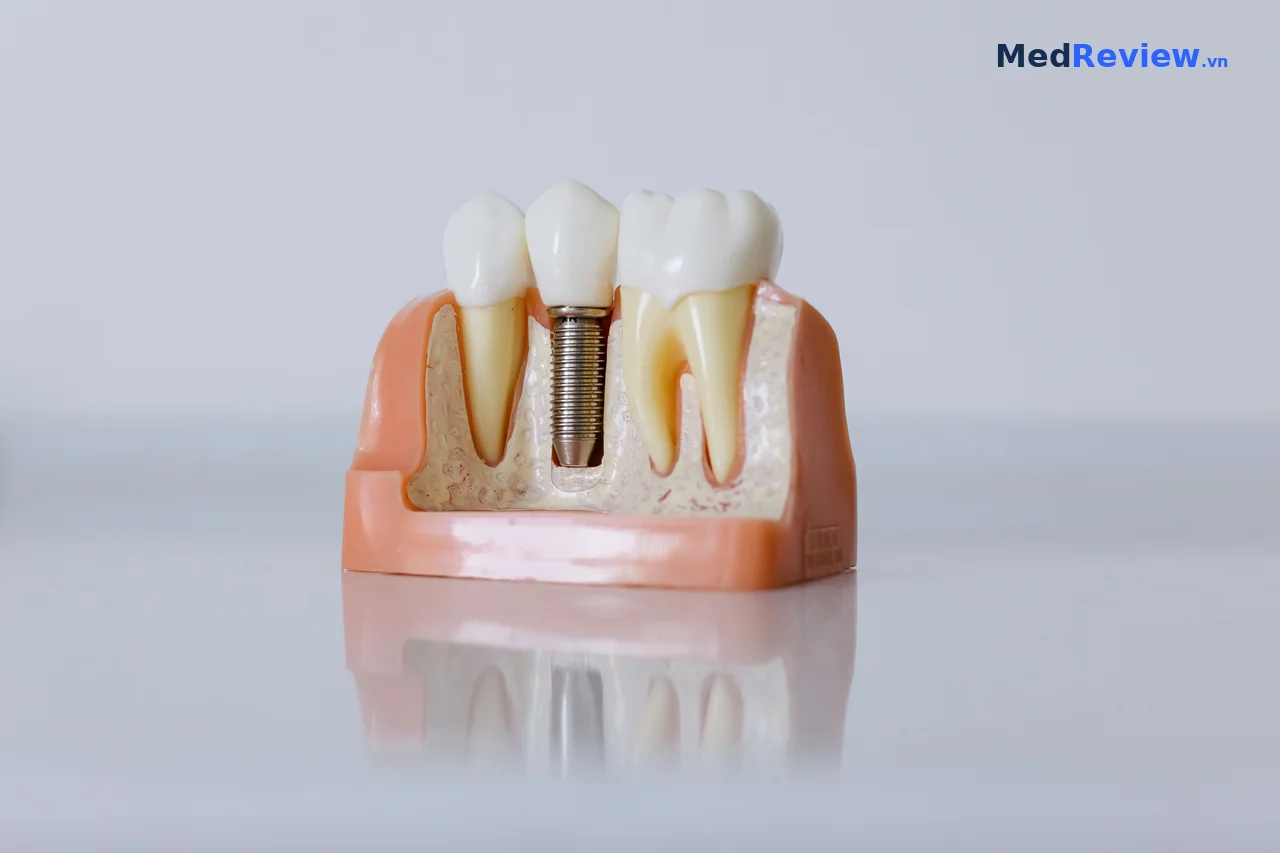
What is a front tooth implant? Who should get one?
An implant is a screw-shaped post made of titanium with high biocompatibility, placed directly into the jawbone by the dentist to replace the lost tooth root. After the post integrates firmly with the bone (usually after 3–6 months), the dentist attaches a connector (abutment) and a porcelain crown on top, creating a complete tooth in both chewing function and aesthetics.
You may consider a front tooth implant in these cases:
- A front tooth lost due to severe decay, trauma or periodontal disease that cannot be preserved.
- You want to restore a front tooth without grinding the two healthy neighboring teeth as with a porcelain bridge.
- You lost the tooth long ago and want to stop ongoing jawbone resorption.
- You need a stable, long-term solution instead of removing and inserting a denture every day.
Why does implant placement in the front tooth area require high technique?
Front teeth are in the aesthetic zone, so the result must be both strong and naturally beautiful. The front jawbone area is quite narrow, so many cases need additional bone grafting (costing about 5–10 million VND) to ensure the implant post stands firm and the gum line around the porcelain tooth looks natural.
While waiting for the post to integrate, the dentist usually makes a temporary tooth so you can go about daily life with confidence. For optimal aesthetics, a customized abutment and an all-ceramic crown can be used (an additional 7–10 million VND or so).
Front tooth implant procedure
The standard procedure at reputable clinics usually includes the following steps:
- Examination and 3D CT Cone Beam scan: assess jawbone height and width and nearby anatomical structures.
- Implant post placement: in many cases the implant can be placed immediately right after tooth extraction with minimally invasive technique. Each post usually takes only 10–15 minutes.
- Waiting for bone integration (3–6 months): the post bonds firmly with the jawbone; during this time you wear a temporary tooth and return for scheduled follow-ups.
- Abutment attachment and impressions: when the post is stable, the dentist attaches the connector and takes impressions to fabricate a porcelain crown that harmonizes with the remaining teeth.
- Fitting the permanent porcelain crown: check the bite so the new tooth chews comfortably without interference.
- Periodic follow-ups every 6 months to check the implant post and clean the teeth.
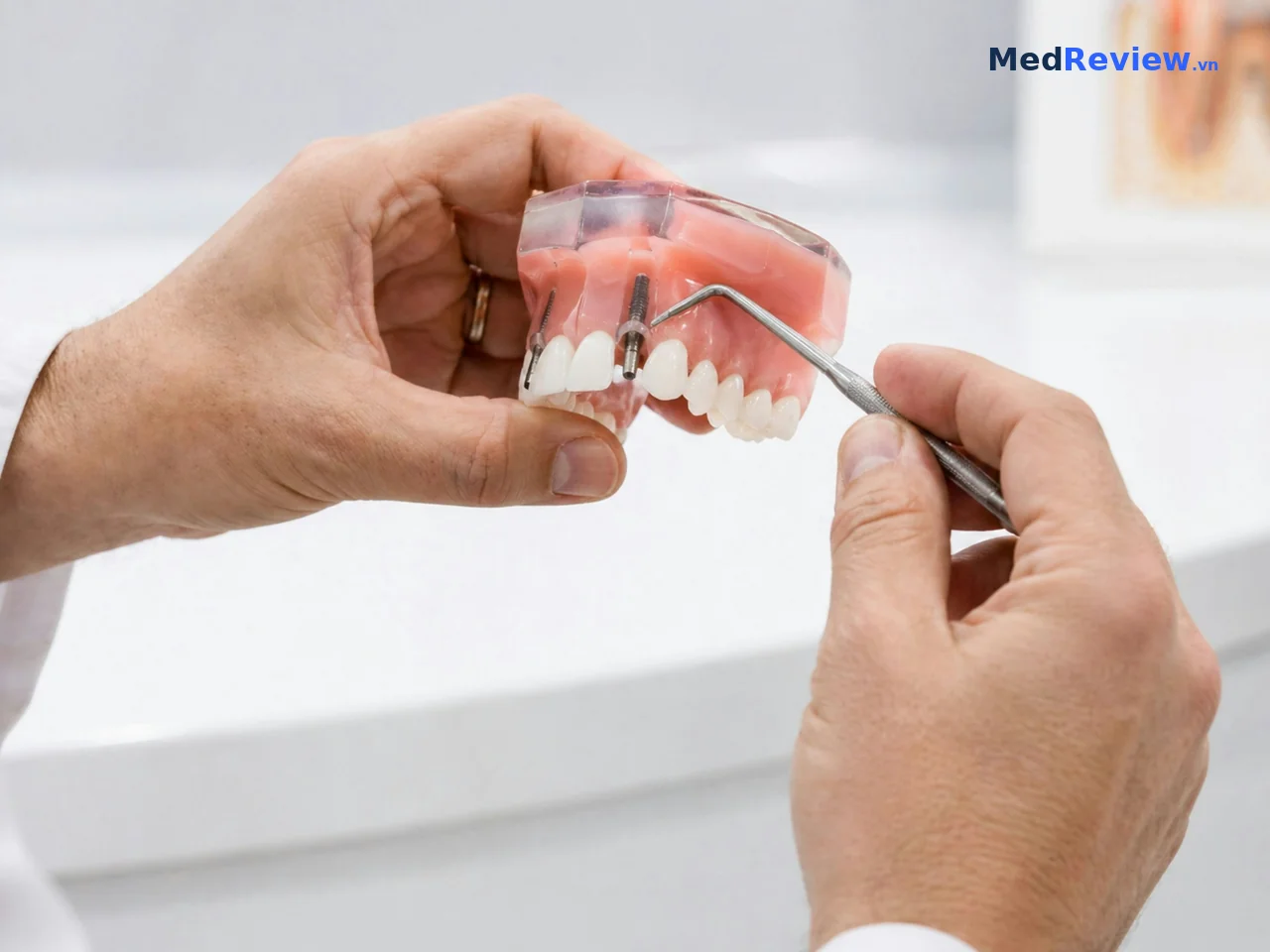
How much does a front tooth implant cost in Da Nang?
Implant cost is calculated by the formula: implant post price + abutment price + porcelain crown price + additional costs (bone grafting, sinus lift if any). In Da Nang, average market prices are as follows:
| Implant post type | Common origin | Reference price (VND/post) |
|---|---|---|
| Standard implant | South Korea (Dio, Dentium, Osstem) | 13,000,000 – 18,000,000 |
| Mid-range implant | USA (Hiossen, Dentium USA) | 20,000,000 – 29,000,000 |
| High-end implant | France/Germany (Tekka, Mis) | 22,000,000 – 26,000,000 |
| Premium implant | Switzerland (Straumann, Nobel Biocare) | 30,000,000 – 45,000,000 |
The prices above usually include the post and abutment; the porcelain crown cost and additional items (bone grafting about 5–10 million VND, customized abutment 2–5 million VND) should be discussed carefully during the consultation. Some dental clinics in Da Nang offer promotional all-inclusive Korean post packages from only about 11 million VND per post, or installment policies. Note: the price list is for reference only, as the actual cost depends on your jawbone condition, the post type you choose and each clinic's policy — ask clearly whether the price is all-inclusive before treatment.
Comparing implants with porcelain bridges and removable dentures
| Criterion | Implant | Porcelain bridge | Removable denture |
|---|---|---|---|
| Cost | 12–45 million VND/tooth | 3–8 million VND/tooth | 0.5–1 million VND/tooth |
| Effect on adjacent teeth | No need to grind real teeth | Must grind the 2 neighboring teeth | No grinding but prone to looseness |
| Prevents bone resorption | Yes | No | No |
| Aesthetics | Natural like a real tooth | Quite high | Low, clasps easily visible |
| Lifespan | Long-term, possibly lifelong with good care | 5–10 years | Short, needs frequent replacement |
Despite the highest initial cost, implants are the only solution that preserves the adjacent real teeth and prevents jawbone resorption — especially important in the front tooth area, where bone loss makes the gums recede and affects the aesthetics of the whole smile.
Notes after front tooth implant placement
- First 2 days: eat soft, cool food; avoid chewing on the newly implanted side; apply a cold compress outside the cheek to reduce swelling.
- First 1–2 weeks: take medication exactly as prescribed by the dentist, do not stop on your own; clean teeth gently, rinse with salt water or an antiseptic solution as instructed.
- Do not smoke during and after the implant process, as it slows healing and reduces the bone integration rate.
- Avoid using the temporary tooth to bite or tear hard food; the temporary tooth serves only a temporary aesthetic role.
- Attend follow-ups on schedule so the dentist can check the integration process and handle early any abnormal signs such as prolonged swelling and pain, bleeding or a loose post.
When should you see a doctor?
Contact the treating clinic immediately if after implant placement you experience: swelling and pain that increase after 3 days instead of decreasing, prolonged bleeding, fever, bad odor or unusual discharge around the implant site, or a loose implant post or temporary tooth. These may be signs of infection or failed integration — they need early treatment.
Frequently asked questions
Does getting a front tooth implant hurt?
The post placement is performed under local anesthesia, so you will hardly feel pain. After surgery there may be mild soreness and swelling for 1–2 days; painkillers will help you stabilize quickly.
How long until you can chew normally?
After 24–48 hours you can eat soft food; after 1–2 weeks the implant area gradually stabilizes. Once the permanent porcelain crown is fitted, you can chew almost like with a natural tooth.
Are front tooth implants durable?
Implant posts can last a very long time; many brands offer warranties from 10 years to lifetime depending on the post line. Actual lifespan depends on oral hygiene, periodic follow-ups and avoiding bad habits such as smoking.
Does everyone need bone grafting for a front tooth implant?
No. If the jawbone is thick and strong enough, you may not need bone grafting. The dentist will assess accurately via a 3D CT scan and only prescribe bone grafting when truly necessary.
Getting a front tooth implant is a long-term investment decision for your smile. Choose a licensed clinic with dentists specialized in implants and modern equipment such as 3D CT Cone Beam, and compare treatment plans from at least two places before deciding. This article is for reference only and does not replace direct consultation with a specialist dentist.