
Ceramic braces in Da Nang are worth considering if you want to straighten misaligned teeth but are concerned about metal braces standing out when you talk and interact with others. This appliance still uses an archwire and fixed brackets; the only difference is that the brackets are tooth-colored or relatively translucent. Before choosing, you should clearly understand the effectiveness, limitations, costs and care requirements throughout treatment.
What are ceramic braces?
Ceramic brackets are bonded to the tooth surface and connected to an archwire, creating light, controlled force to move teeth according to the orthodontic plan. The brackets can be translucent or ivory-colored. The archwire, elastic ties and some accessories can still be visible, so this is not an invisible braces method.
There are two common groups: conventional ceramic braces, which use elastic ties or ligature wires to hold the archwire; and self-ligating ceramic braces, which use a clip or door to hold the wire. It cannot be concluded that self-ligating brackets are always faster, less painful or suitable for every case. The dentist needs to assess your bite before recommending an appliance type.
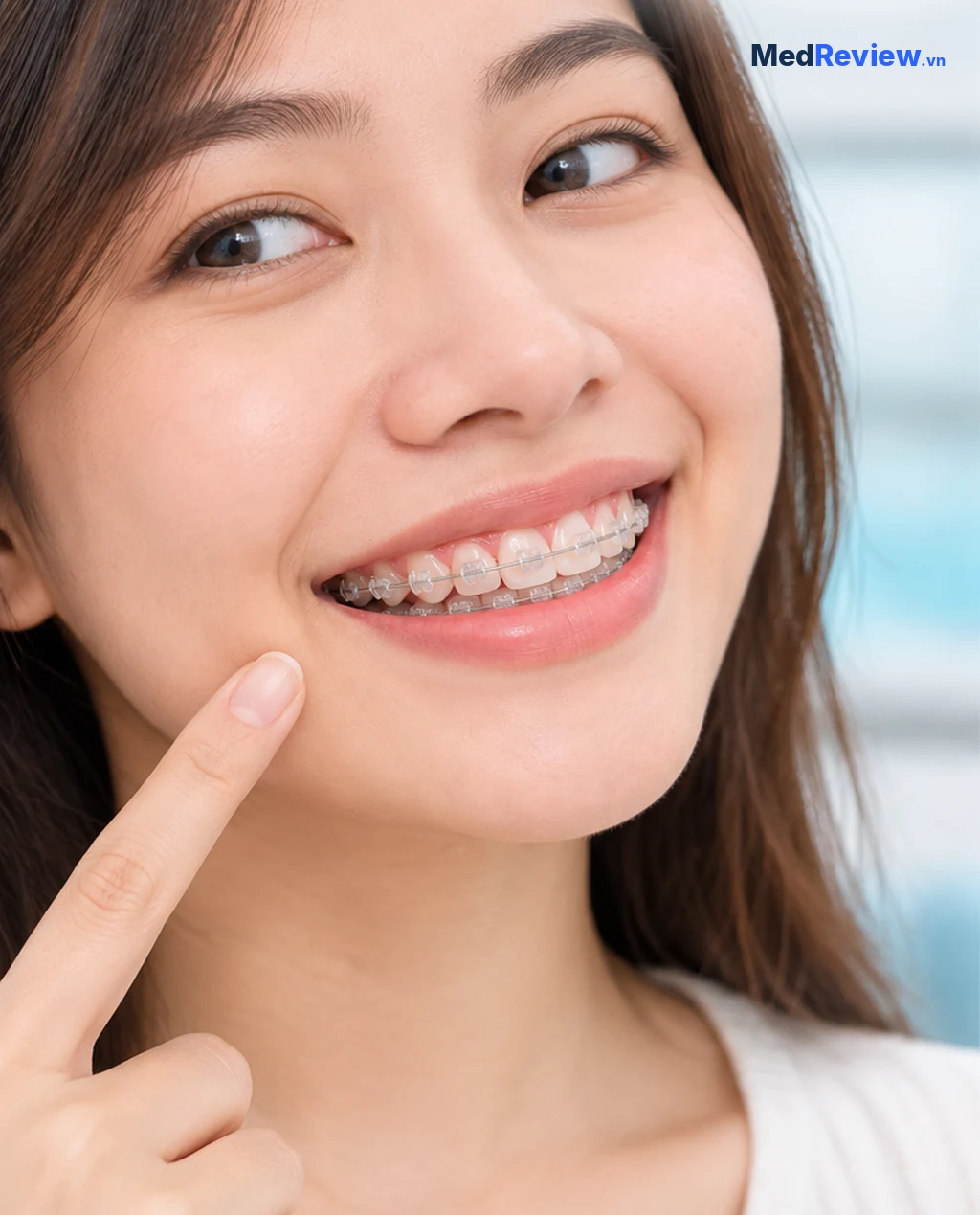
Advantages and limitations of ceramic braces
Advantages
- Less noticeable: the bracket color blends closely with tooth enamel, helpful for people who communicate frequently.
- Fixed: no need to remember daily wear hours like removable appliances, although many other instructions still apply.
- Can treat many types of misalignment: such as crowding, gaps or some bite problems when indicated by the dentist.
Limitations to know
- Durability: ceramic can be brittle and chip or break more easily than metal under unsuitable force.
- Cost: often higher than metal braces, depending on the system and clinic.
- Hygiene: food and plaque easily accumulate around brackets; light-colored elastic ties can stain from food and drink.
- Suitability: certain bite relationships or treatment plans may lead the dentist to prefer metal braces or another solution.
Comparing ceramic braces, metal braces and clear aligners
| Criterion | Ceramic braces | Metal braces | Clear aligners |
|---|---|---|---|
| Aesthetics | Less noticeable, archwire still visible | Appliance easily seen | Hard to notice when worn |
| Removability | Fixed | Fixed | Removed and inserted by the user as instructed |
| Material durability | Avoid strong impacts | Usually more durable | Avoid losing or deforming the trays |
| Cost | Can be higher than metal | Usually the more economical option | Depends on the system and number of trays |
| Compliance requirements | Hygiene, follow-up visits | Hygiene, follow-up visits | Wear enough hours, hygiene, follow-up visits |
No method is the best for everyone. Results depend on the diagnosis, the severity of the malocclusion, force design, dental and gum health and the patient's cooperation — not only on the bracket material.
How long do ceramic braces take?
Orthodontic treatment time is usually measured in months to years. The NHS states that a common range is 12–30 months for orthodontics in general; this is not a fixed benchmark for ceramic braces specifically. Mild cases can differ from cases that need simultaneous adjustment of tooth position and bite.
Follow-up visits are usually a few weeks apart according to an individual schedule. Repeatedly missing appointments, debonded brackets or poor hygiene can complicate treatment. After the braces are removed, you need to wear a retainer as instructed to limit teeth shifting back.
How are ceramic braces costs in Da Nang calculated?
An advertised price should not be taken as the final cost for every case. Quotes differ according to the degree of misalignment, bracket type, number of arches treated, expected duration and accompanying interventions. Updated prices need to be confirmed directly at the clinic.
When receiving a quote, ask specifically:
- Is the price for one or two arches, which bracket type, and is there information about its origin?
- Does it include the examination, diagnostic imaging, scans or impressions, fitting and adjusting the appliance?
- Are treatments for cavities, periodontal disease, tooth extraction or orthodontic miniscrews (if needed) charged separately?
- Are there fees for replacing broken brackets, unscheduled visits, debonding or the retainer?
- How are installment payments and refunds regulated if treatment must stop or move to another clinic?
Request a written treatment plan and price list before paying a deposit, especially when follow-up care will extend over a long period in Da Nang.
Treatment steps and monitoring
Usually, the dentist examines the teeth, gums and bite, takes X-rays or scans when needed, makes a plan, then treats oral diseases before fitting the appliance. You attend regular follow-ups for force adjustment, then have the braces removed and wear a retainer. Tooth extraction or orthodontic miniscrews are not mandatory indications for every case.
Caring for ceramic braces to limit cavities and gum inflammation
Fixed appliances make cleaning harder, creating places for plaque to accumulate. With poor hygiene, braces wearers can develop cavities, inflamed gums or white demineralization spots on the enamel. Consistent oral hygiene must be maintained from the very first day.
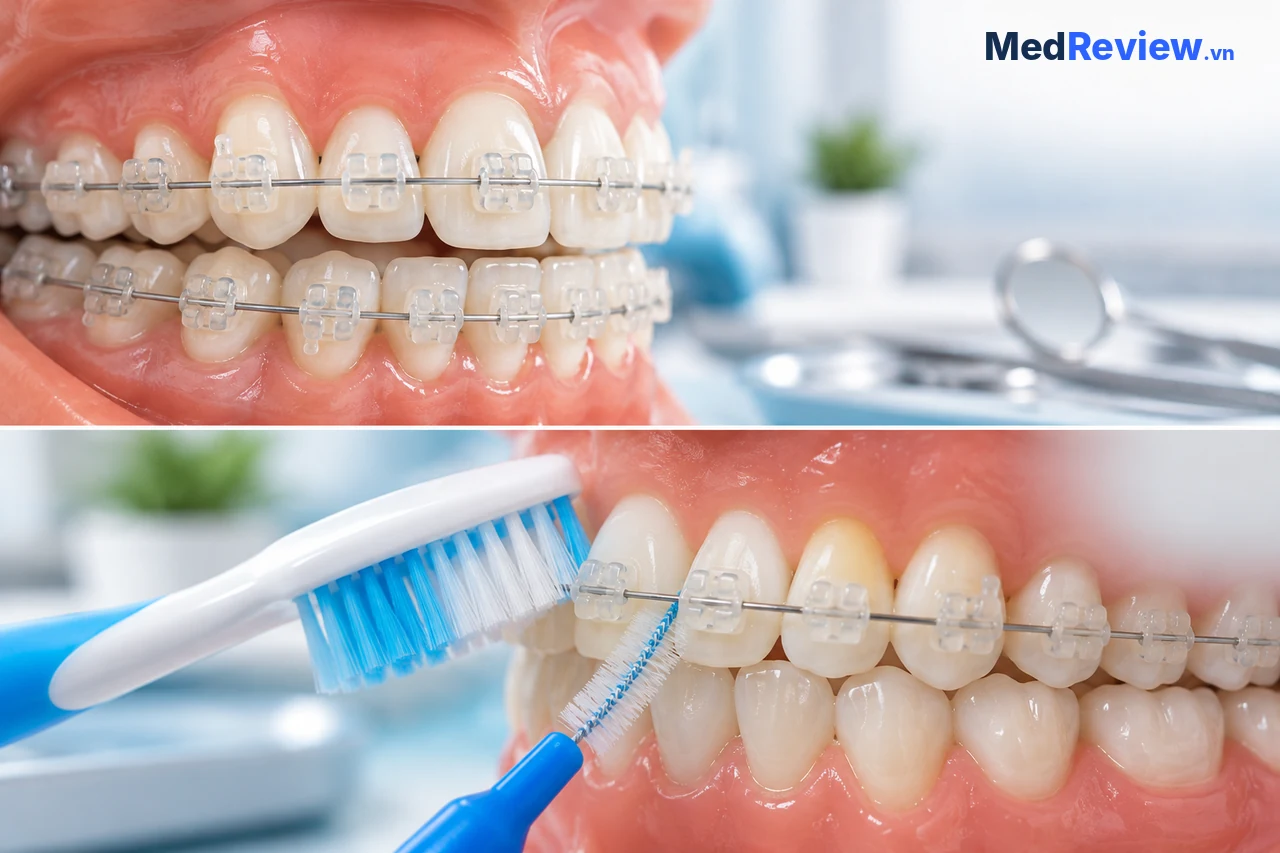
- Brush with fluoride toothpaste in the morning, in the evening and after eating; brush above and below the brackets and along the gumline.
- Use interdental brushes, floss with a threader or other tools as instructed by the dentist.
- Limit hard, sticky and chewy foods; cut food into small pieces instead of biting directly into hard items.
- Reduce sugary drinks and frequent snacks; watch out for light-colored elastic ties that stain easily.
- Keep attending regular dental check-ups even while having orthodontic follow-ups.
Signs that you should contact the dentist
Mild tooth soreness or tightness for a few days after fitting or adjustment can occur. Contact the dental clinic if pain persists or increases, a bracket comes loose, the archwire pokes your cheek, gums become clearly red, swollen and painful, or you cannot eat and drink normally. Do not tighten the wire yourself, remove brackets or use sharp tools to cut the wire. If facial swelling increases quickly, or there is fever with swelling and pain, difficulty swallowing or difficulty breathing, seek urgent medical care.
Choosing a braces provider in Da Nang: what to check?
Instead of only comparing before–after photos or promotions, determine who diagnoses and monitors you throughout and how the clinic explains the options. You can ask about the operating license, the dentist's practice credentials, diagnostic records, treatment risks, the follow-up schedule and how appliance breakage is handled.
Frequently asked questions
Do ceramic braces turn yellow?
The ceramic material itself is usually more color-stable than the elastic ties inside; the ties and plaque around the brackets can change color. Proper cleaning and replacing ties on schedule help limit aesthetic loss.
Are ceramic braces faster than metal braces?
There is no basis to assume they are faster just because ceramic is chosen. Duration and effectiveness must be assessed on each patient's treatment plan.
Conclusion
Ceramic braces have an aesthetic advantage over metal braces but require attention to durability, hygiene and total cost. If you are researching services in Da Nang, prioritize an in-person orthodontic examination and ask the dentist to explain the treatment plan clearly. This content is for education and reference only; it does not replace diagnosis and professional advice for each individual.